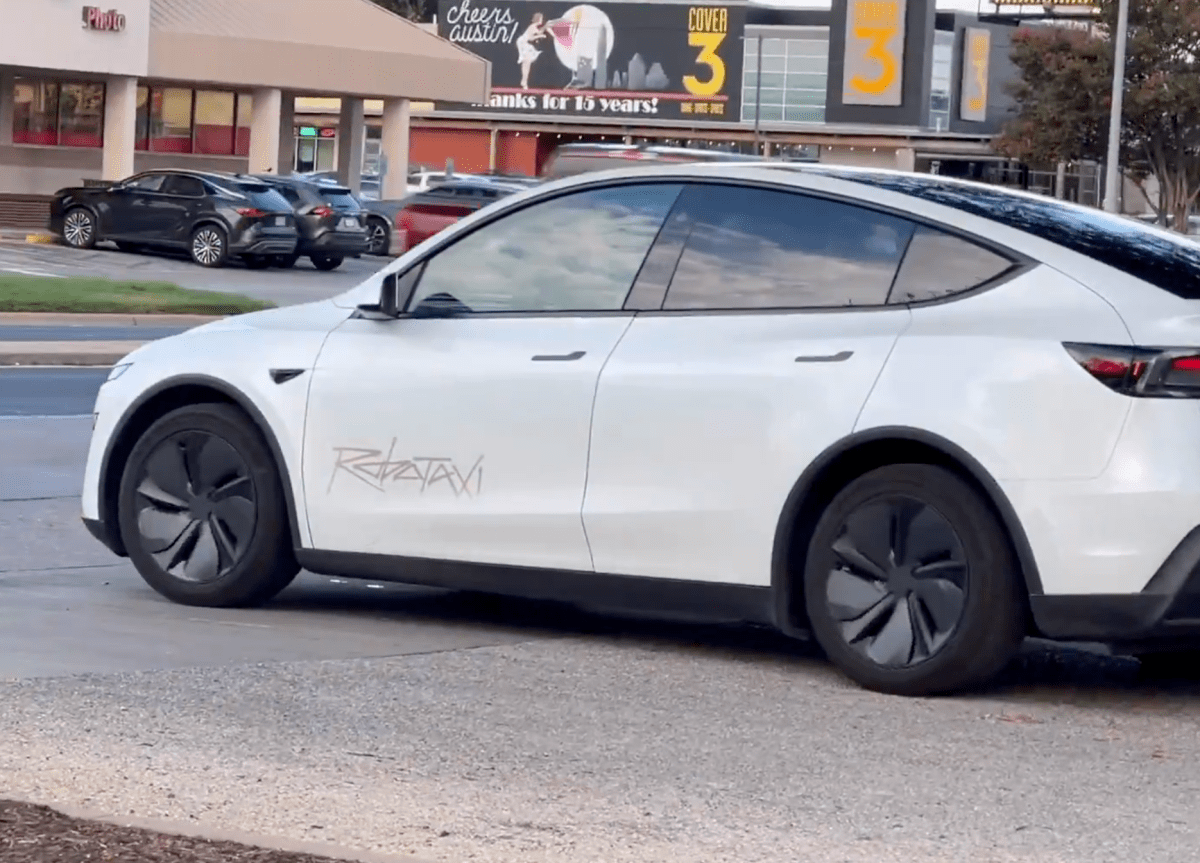
The Tesla FSD Resale Reality: Why Your $15K Investment Might Vanish
Tesla has long captivated the automotive world with its audacious vision and technological leaps. Central to this vision, and indeed to its soaring valuation, is the promise of full self-driving capabilities. While investors wager billions on Tesla's autonomous future, for the individual consumer, the reality of purchasing the $15,000 Full Self-Driving (FSD) package presents a perplexing dilemma, particularly when it comes to its value on the secondary market. The grand pronouncements of FSD increasing a vehicle's worth "by multiples" are increasingly clashing with a starker truth: its resale value may be plummeting towards zero.
The allure of Tesla's FSD is undeniable. It promises a future where your car navigates autonomously, handles complex driving scenarios, and offers an unprecedented level of convenience. Yet, as the technology evolves in its Beta stage, and despite its premium price tag, evidence suggests that this substantial upfront investment delivers surprisingly little tesla self-driving value when it's time to sell your vehicle. This article delves into the chasm between investor expectations and consumer experience, exploring why the FSD package, while a significant part of Tesla's market narrative, struggles to retain its worth for owners.
The Promise vs. The Price Tag: Decoding Tesla FSD's Initial Investment
When you opt for Tesla's Full Self-Driving software, you're shelling out a hefty $15,000. This isn't merely an incremental upgrade; it's a significant financial commitment on top of an already premium vehicle purchase. For years, Elon Musk has championed FSD not just as an advanced feature, but as a future asset, repeatedly suggesting it would drastically appreciate the value of an owner's Tesla vehicle. The vision was clear: buying FSD today was an investment in tomorrow's mobility revolution, a move that would pay dividends when it came time to sell.
However, the current iteration of FSD, despite its "Full Self-Driving" moniker, is not what most would envision as truly autonomous. The Society of Automotive Engineers (SAE), the body responsible for defining driving automation levels, classifies Tesla's FSD as a Level 2 system. This means it provides advanced driver assistance, handling steering, acceleration, and braking, but critically, it still requires the driver to remain fully attentive and ready to intervene at all times. This distinction is crucial, as true Level 5 autonomy—where the vehicle handles all driving tasks under all conditions without human intervention—remains a distant goal.
With hundreds of thousands of Tesla vehicles in North America now equipped with the FSD Beta, owners receive regular over-the-air updates, gradually adding new capabilities. This continuous development cycle, while exciting, also contributes to the uncertainty surrounding its long-term value. Every new update, every new iteration, implicitly renders the "older" version slightly less advanced, potentially eroding its perceived value faster than a fixed hardware component.
The Harsh Reality of Resale: Why Your FSD Value Plummets
The most compelling evidence challenging the FSD's promised appreciation comes from market observers and, more importantly, from real-world Tesla owners. Prominent Tesla short-seller Jim Chanos, known for his incisive financial analysis, has publicly asserted that the tesla self-driving value of the FSD package in the retail market is "probably close to zero." He highlights the ironic disconnect between Musk's past claims of value appreciation and Tesla's own approach to FSD during trade-ins.
Chanos's theory is bolstered by anecdotal yet widespread experiences from Tesla owners attempting to trade in their FSD-equipped vehicles. One notable example, shared on social media by a Tesla owner named "Alex" (@kuthedk), showcased his 2020 Model Y Performance with FSD being valued significantly lower than anticipated. His trade-in advisor suggested the FSD package would only contribute around $3,900 to the car's overall value. Considering he likely paid $10,000 or more for it (prices have fluctuated before reaching $15,000), this represents a staggering depreciation of over 74% in just a few years – far outpacing the car's own depreciation. The vehicle itself was valued at roughly 48% less than a brand-new equivalent, but the FSD package suffered an even more precipitous drop.
This rapid depreciation can be attributed to several factors:
- Software, Not Hardware: Unlike physical upgrades (larger battery, performance motors), FSD is software. Its value is perceived to be less tangible and more susceptible to obsolescence as new versions and capabilities emerge.
- Beta Stage Uncertainty: The "Beta" label signifies ongoing development. Buyers of used FSD-equipped cars are inheriting an evolving, not a final, product. Concerns about future capabilities, regulatory changes, or even potential liability might deter them from paying a premium.
- Non-Transferability Issues: Historically, FSD has been tied to the original owner or vehicle. While Tesla has experimented with transferability, the uncertainty surrounding this policy makes it a less reliable asset for future sales.
- Subscription Model: Tesla introduced an FSD subscription option, allowing owners to pay monthly ($99-$199) instead of a lump sum. This gives potential used car buyers an alternative to owning the package outright, further eroding the incentive to pay extra for a pre-installed FSD package. Why pay a premium for a used car with FSD when you can subscribe to it later if you wish?
Understanding the Disconnect: Investor Hype vs. Consumer Experience
The paradox lies in the two distinct valuations of "tesla self-driving value." On one hand, institutional investors and analysts peg a significant portion—reportedly as high as 77%—of Tesla's stratospheric stock market valuation on the successful realization of its autonomous driving ambitions. This valuation is based on the transformative potential of FSD: robotaxis, recurring revenue streams, and a massive expansion of Tesla's addressable market. From this perspective, FSD is the linchpin of Tesla's future, a source of immense asset value for the company.
On the other hand, for the individual car buyer in the secondary market, FSD is merely an optional software add-on. The practical utility of a Level 2 system for a used car buyer, especially given the costs and ongoing "Beta" status, often doesn't justify a significant premium. A used car buyer is looking for reliability, tangible features, and good value. The promise of a robotaxi network in an unspecified future holds little sway when they're negotiating a trade-in price today.
This creates a significant chasm. Tesla as a company is valued for its potential to revolutionize transport with FSD, but the individual FSD software package, sold to consumers, struggles to retain its monetary value once the car hits the used market. It highlights a critical difference between a company's strategic, long-term asset value and the depreciating utility value of a specific, evolving software feature for an individual.
Navigating the FSD Purchase: Tips for Prospective Buyers
Given the current market dynamics, prospective Tesla buyers or existing owners considering the FSD package should approach this decision with a clear understanding of the financial implications. Here are some practical tips:
- Evaluate Your Needs: Are you genuinely interested in the cutting-edge (and still developing) capabilities of FSD, or would the standard Autopilot and Enhanced Autopilot features suffice? For many, the core functionalities offered by these standard features are more than adequate for daily driving.
- Consider the Subscription: The FSD subscription model offers significant flexibility. Instead of a $15,000 upfront cost that likely won't be recouped, you can pay a monthly fee. This allows you to try FSD, use it for specific road trips, or simply avoid the depreciation headache if you plan to sell your car within a few years.
- Don't Expect Resale Value: Go into the FSD purchase assuming you will not recoup a significant portion, if any, of your investment when you sell the car. View it as a personal luxury or an investment in the future of technology, not a financial asset that will appreciate.
- Factor it into Total Cost of Ownership: When calculating your Tesla's total cost of ownership, treat the FSD package as an expensive consumable that depreciates rapidly, much like premium tires or specialized maintenance, rather than a fixed asset.
- Stay Informed on Transferability: While Tesla has shown willingness to make FSD transferrable in certain instances, it's not a consistent policy. If transferability is critical for your future resale plans, monitor Tesla's official announcements closely.
Conclusion
The Tesla FSD package embodies the dual nature of innovation: incredible promise and uncertain reality. While Tesla's overall valuation is heavily invested in the success of its autonomous driving aspirations, the individual consumer purchasing the $15,000 FSD add-on faces a different landscape. Real-world experiences and expert analyses increasingly point to a significant depreciation, with the tesla self-driving value of FSD potentially plummeting to near zero in the used car market. For now, buyers should view FSD as a premium feature purchased for immediate enjoyment and technological engagement, rather than a sound financial investment that will retain its value upon resale. As the future of autonomous driving unfolds, so too will the true market value of this ambitious technology.